What Is AI in Inspection?
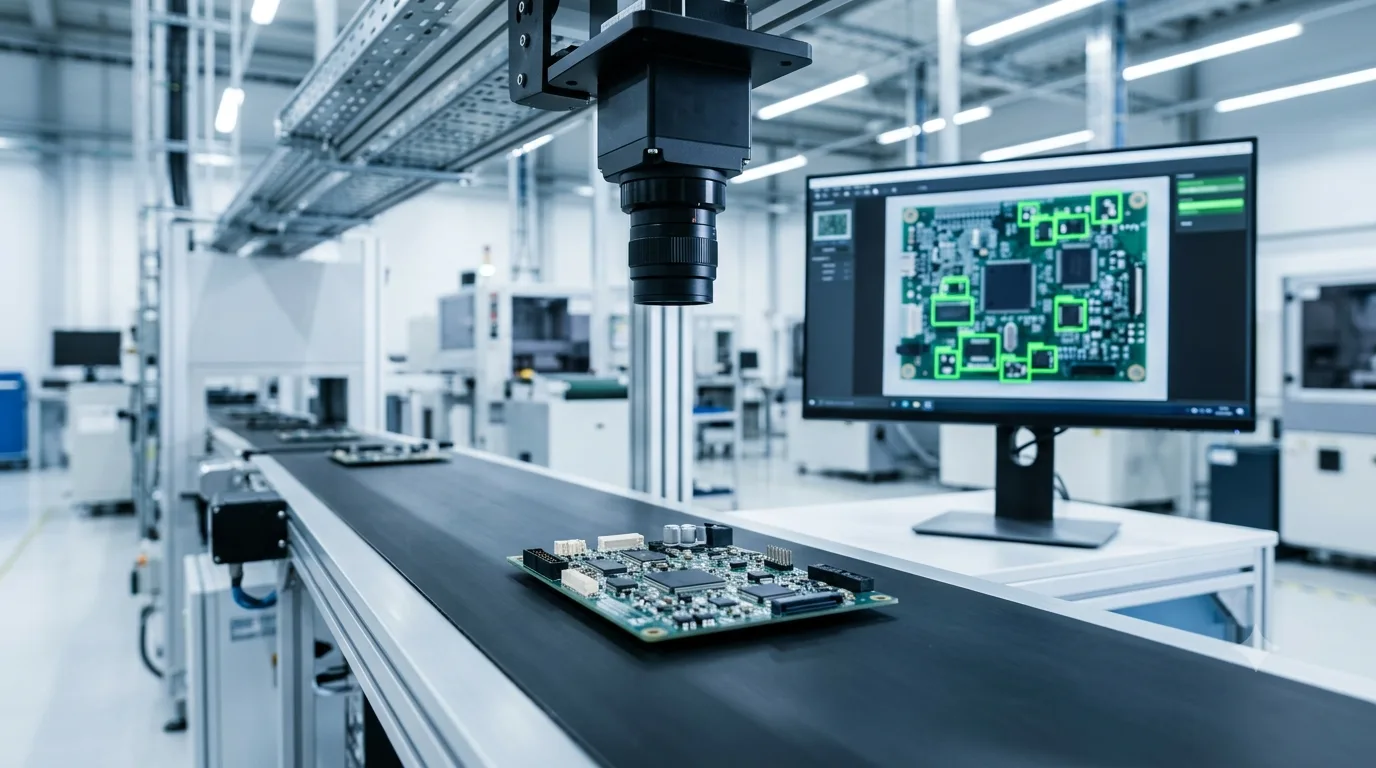
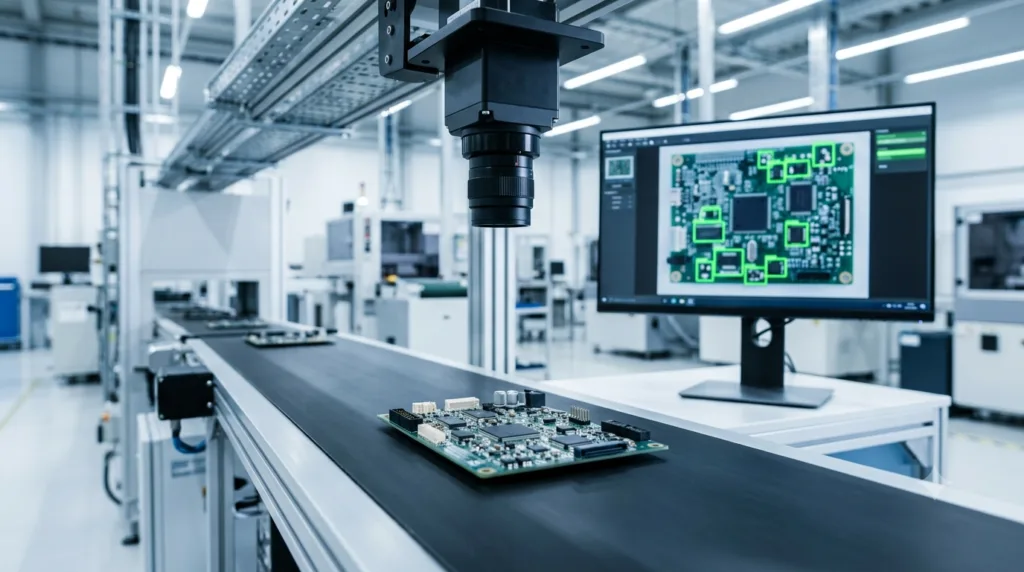
AI in inspection refers to the use of artificial intelligence — specifically computer vision and machine learning — to automatically detect defects, measure components, and verify quality standards in a manufacturing or industrial setting. Instead of relying on human eyes or traditional rule-based machines, AI inspection systems learn from thousands of images to identify what a defect looks like and flag it in real time.
In plain terms: you train the AI to know what a good product looks like. From then on, every product that passes in front of the camera is checked against that standard — instantly, consistently, and without fatigue.
For a broader overview of how computer vision is transforming manufacturing beyond quality control, read our earlier guide: Use Cases of Computer Vision in Manufacturing
What Is the Difference Between Manual Inspection and AI Inspection?
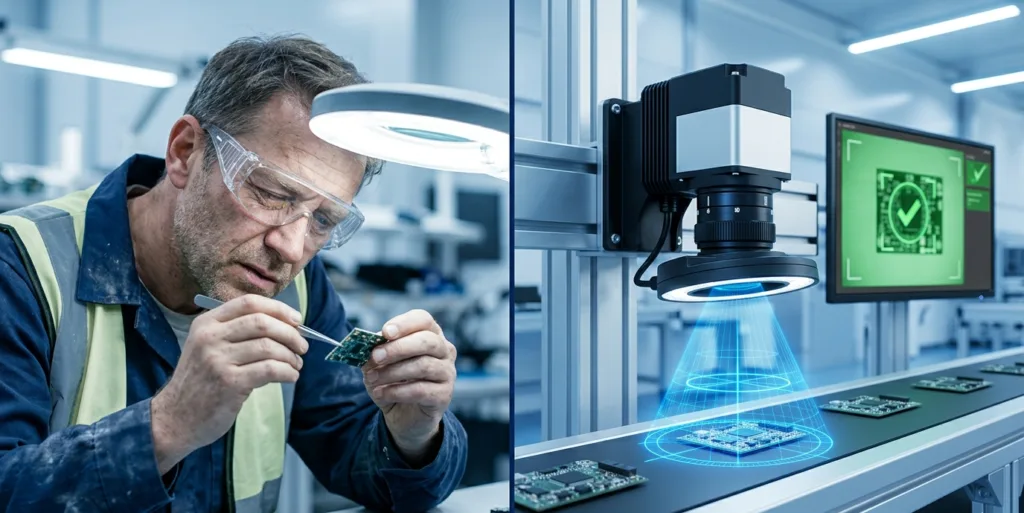
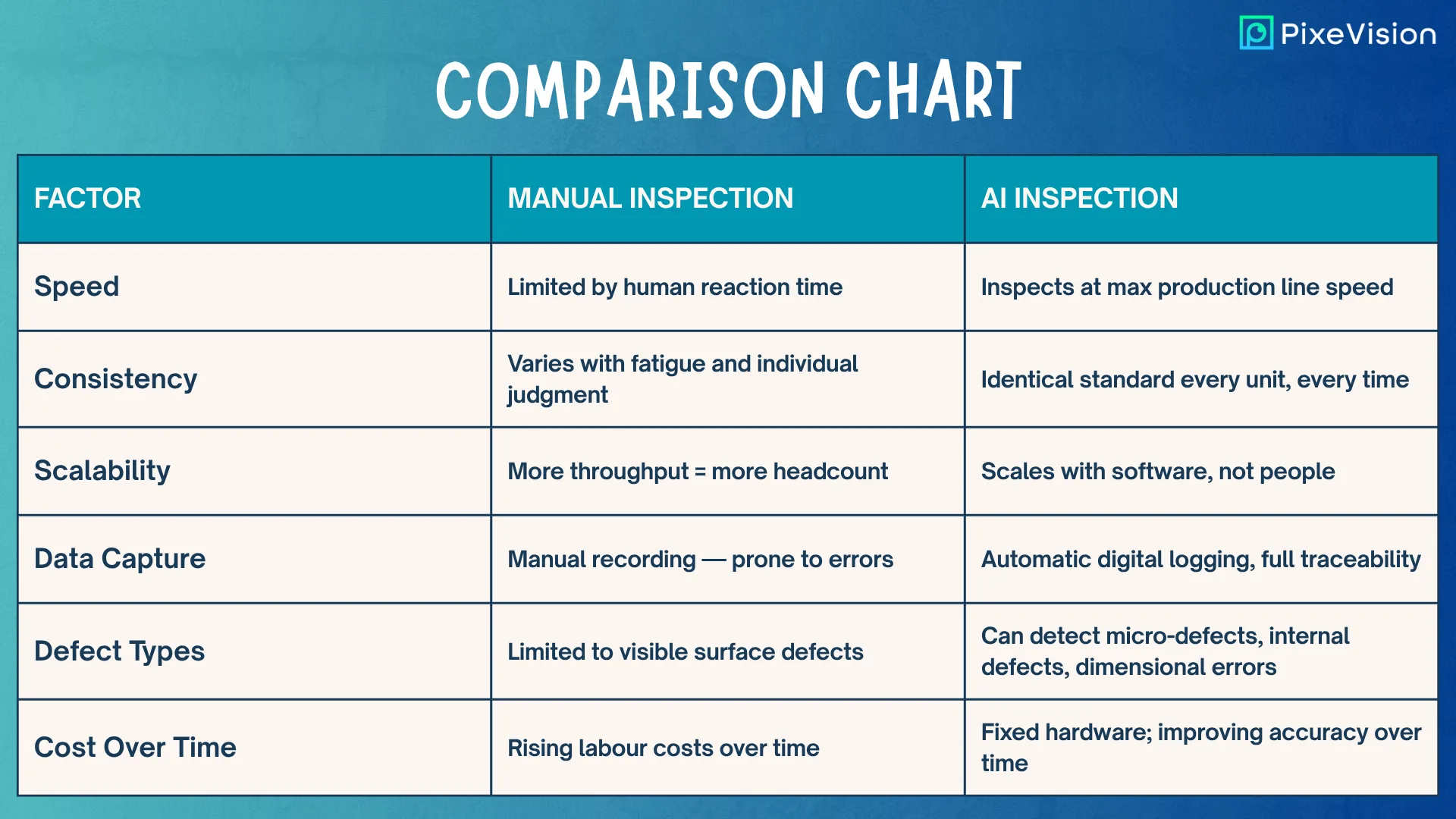
Manual inspection relies on trained human operators visually checking products on a production line. It is effective but carries three fundamental limitations: human fatigue introduces errors over long shifts, individual judgment varies from person to person, and manual inspection creates a bottleneck that slows production.
AI inspection removes all three. A well-trained AI vision system checks every single unit with the same standard, at speeds no human can match, without breaks, shift changes, or subjective variation. For a comprehensive comparison, see our article on Manual QC vs AI Inspection.
What Does AI Check for in a Manufacturing Setting?
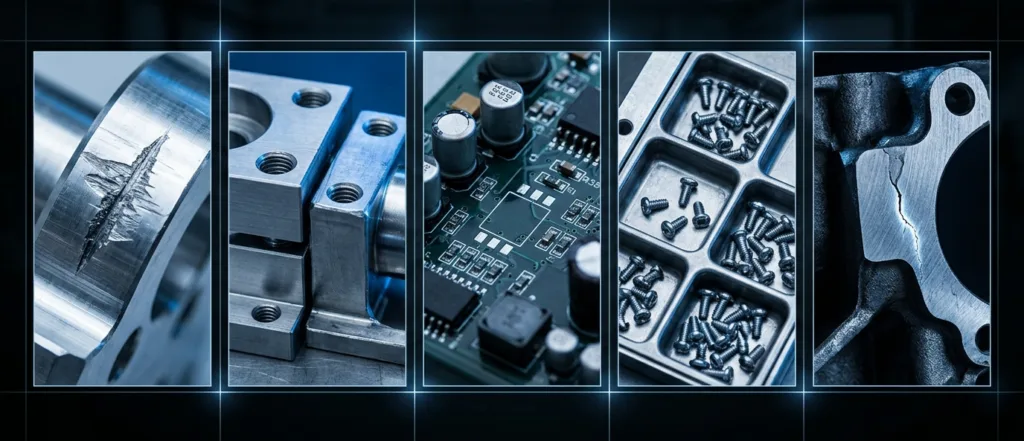
This depends on the industry and the specific system, but AI inspection can detect:
- Surface defects — scratches, cracks, dents, discolouration, burrs, contamination
- Dimensional non-conformance — components that are the wrong size, shape, or position
- Assembly errors — missing components, incorrect orientation, wrong labelling
- Count verification — confirming the right number of units are present in a bundle or batch
- Internal defects — using specialised optics to inspect the inside of hollow components
What Model is Used for Defect Detection?
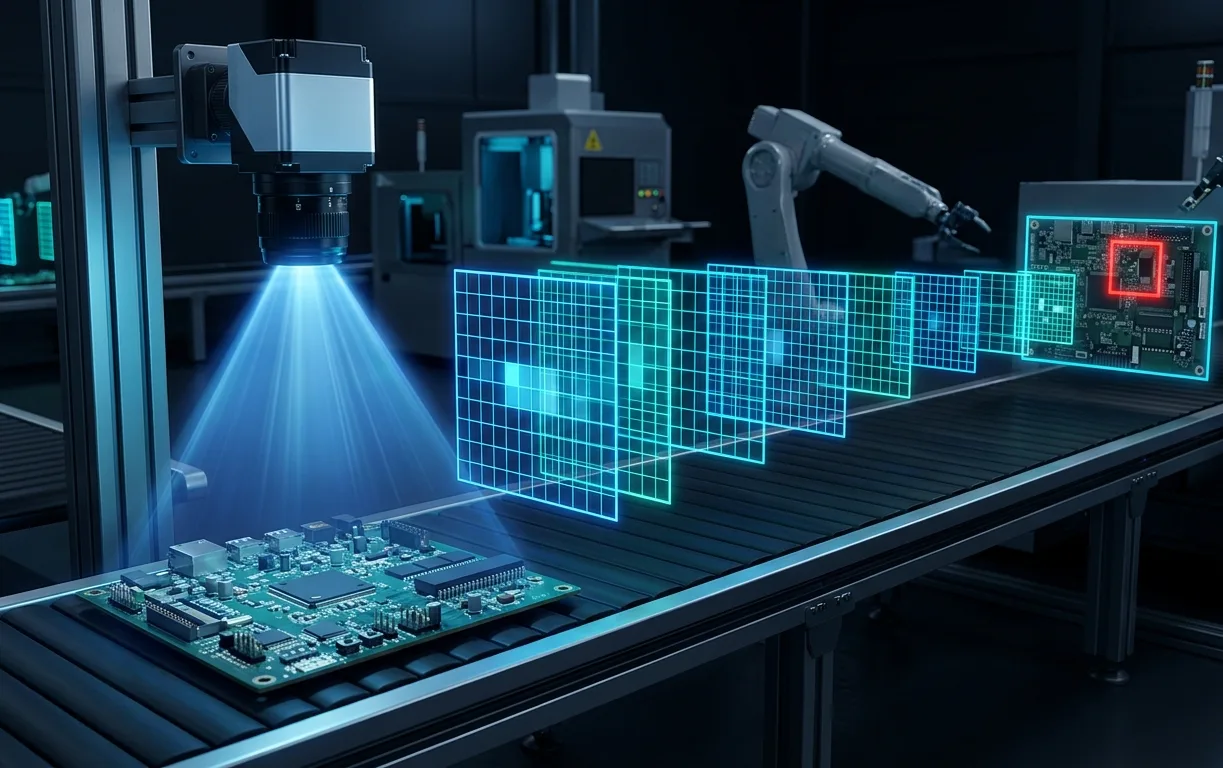
Most industrial AI inspection systems use deep learning models — particularly Convolutional Neural Networks (CNNs) — trained on thousands of labelled images of both good and defective products. The model learns to identify the visual signatures of each defect type.
Modern systems like PixeVision’s See.AI™ are camera-agnostic and model-agnostic — trained on whatever imaging source best suits the application, whether RGB cameras for surface defects or greyscale feeds for dimensional checks. The AI learns from your data, not from a fixed hardware assumption.
How Is AI Used in Industrial Maintenance?
Beyond production QC, AI is increasingly used for predictive maintenance — detecting patterns in machine sensor data that indicate an impending failure before it happens. This is a related but distinct application from visual inspection. PixeVision’s EKE™ product addresses the knowledge management and maintenance assistant dimension of this challenge.
Learn more on the EKE product page.
Is AI Inspection 100% Correct?
No AI system is 100% accurate — and any vendor claiming otherwise should be questioned. However, well-trained industrial AI systems achieve accuracy rates that far exceed human inspection in controlled conditions.
PixeVision’s See.AI™ achieved a 98.5% final yield rate for a semiconductor client, up from 90% FPY (first-pass yield) from their AOI machines — representing a dramatic improvement over the previous manual re-inspection process.
A semiconductor client improved their production yield rate from 90% to 98.5% after deploying See.AI™ — eliminating the manual re-inspection bottleneck and reducing defect escapees reaching end customers.
A well-known pattern in AI model training is that the final gains in accuracy are disproportionately expensive — pushing from 95% to 99% often requires far more data, compute, and tuning than getting from 70% to 95% in the first place.
This is precisely why successful AI inspection deployments are rarely plug-and-play. Achieving high performance requires close collaboration between technical specialists and a manufacturer’s own readiness — including clean, well-labelled production data, defined defect criteria, and consistent imaging conditions before training even begins.
What AI Application can Inspect Products for Defects?
Several AI vision platforms exist for industrial inspection. Key categories include:
- General-purpose computer vision platforms (AWS Rekognition, Google Vision AI)
- Purpose-built industrial inspection software (including PixeVision’s See.AI™)
- AOI (Automated Optical Inspection) machines enhanced with AI layers
The key differentiator is whether the system is built for your specific industry and defect types, or whether it is a generic platform requiring extensive custom development. PixeVision’s See.AI™ is purpose-built for industrial manufacturing in Southeast Asia, with proven deployments in semiconductor, metal, and other manufacturing environments.
Reference: For an overview of computer vision in industrial inspection, see IBM’s explanation at ibm.com/think/topics/computer-vision.
Ready to See AI Inspection in Action?
See What AI Inspection Can Do for Your Production Line
Talk to our AI experts about your specific inspection challenge, or explore See.AI™ to learn more about the technology.